Free hit counter

Search This Blog

Showing posts with label Green World. Show all posts

Sunday, January 8, 2012

Solar Panel Roof Shingles

The National Research Council (NRC) of Canada released, in their December 2011 Construction Innovation newsletter, that they are evaluating the possibilities of using building-integrative photovoltaic (BIPV) shingles and turning the low sloped roofs, typically found on commercial supermarkets, industrial warehouses and school buildings, into energy producers. BIPV shingle products are expected to become available in Canadian markets sometime in 2012, if they already aren’t available.
A study published in November by the National Renewable Energy Laboratory (NREL), compared BIPV systems with traditional roof mounted photovoltaic (PV) systems. The study found on average BIPV systems had a reduced efficiency of around 6-14% conversation rate, compared to 15% conversion rate for roof mounted PV systems. The primary reason for reduced efficiency in BIPV vs. roof mounted PV systems was the lack of air flow beneath the solar cells, increasing the cells operating temperature, resulting in increased corrosion of the metalized key components.Overall the study looked at the unsubsidized levelized costs of energy (LCOE) between these systems. The levelized cost of energy is the installation costs, plus the lifetime maintenance/repair costs, all over the expected lifetime electricity production amount. The study looked at two locations: Tucson and Boston, the levelized cost per kWh was $0.19 and $0.25 respectively. Assuming Boston most likely represents an average Canadian environment, when compared against the peak electricity rate in Toronto, ~$0.15 (all costs in) per kWh, a BIPV system ends up being just less than twice as expensive as simply grabbing energy from the grid.
 In this event a BIPV system might be beneficial if electricity prices increased by 70%, or if the costs of installing and maintaining a system was halved, or its operational lifetime doubled. The latter would be less desirable in regards to the time value of money, but could be considered as a hedge investment against a possible increase in electricity costs.
Overall a BIPV system does save common building material costs, such as asphalt for roof shingles or mounting hardware for roof mounted PV systems. However because BIPV are being directly installed on the building material, the products must adhere to higher quality standards and building codes. When compared against traditional mounted PV systems, in addition to improved quality over typical roofing systems, BIPV shingles could offer an aesthetic value to home or commercial building owners, interested in the look, or values that BIPV can represent.
READ MORE - Solar Panel Roof Shingles

Sunday, December 18, 2011

Green Technology Expected to Rescue The Economy

A rising number of entrepreneurs are delving into a sea of green – a wave of opportunities in the green technology industry that have the potential of producing millions of green jobs. Although the world’s richest people cannot be expected to rescue the economy as the world gets ready to turn the corner into a new year, experts say green business leaders do have the potential of paving the way for a brighter economic future.
According to experts, the world’s wealthiest individuals actually are placing more of their focus on protecting their own assets in the slow-growth economy. For this reason, they are expected not to be as risk-taking in 2012 – at least not as risk-taking as is necessary to help to boost the economy.
Robert Frank, a Wall Street Journal writer who spoke recently at the Economist’s World in 2012 summit, said that millionaires throughout the world likely will have to pay more in taxes to help nations that are struggling with high debts.
In addition, Frank said he expected that the number of millionaires in Asia should be higher than the number of millionaires in the United States next year.
However, green technology is opening up several doors for aspiring entrepreneurs, and the work of these entrepreneurs should create many more job opportunities in America. Green businesses can be both cost-saving and money-making in that they provide green products and services that help customers to reduce their ecological footprints while saving on energy costs. Billions of dollars are wasted as people waste water, energy and other important resources.
Green companies also promote recycling, which further saves people money. Because of the increasing demand for green businesses’ offerings – such as clean energy and clean water – their money-making potential is high, which translates to more green job opportunities, thus getting more unemployed individuals back to work.
Small green businesses actually are more capable of creating new jobs faster than large companies can and thus should be at the forefront of leading America’s economic recovery through clean energy technologies and green employment opportunities, according to the Center for Small Business and the Environment.
The wealthy worldwide may be expected to be more cautious with their spending next year in light of the volatile economy, but the volatility of the market – combined with people’s growing realization of the need to save money and save their planet – should provide a breeding ground for green entrepreneurs to arise and make a difference. It’s a difference that can preserve the Earth, people's hopes of landing jobs, Americans’ wallets and subsequently the economy for coming years.
READ MORE - Green Technology Expected to Rescue The Economy

Friday, November 25, 2011

Air pollution from industry in the EU costs the UK up to €18bn a year

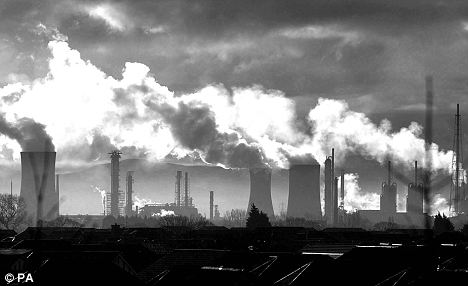
Air pollution from industry costs Britain £3.4bn-£9.5bn a year in health and environmental damage, according to the European environment agency (EEA). When CO2 costs are included, the figure rises to £9.5bn-£15.5bn– more than the government spends a year on the arts, environment, transport and security and intelligence combined.
In a first attempt to link financial costs to emissions from large power stations, refineries, waste plants and factories, the Copenhagen-based agency calculates that air pollution cost Europe £86.1bn-£145.5bn in 2009. It has used government figures and has arrived at the costs by factoring in population densities, health costs, building damage and crop losses from pollutants such as low-level ozone. By far the biggest single pollutant is CO2, one of the main climate change gases. Costs have been calculated by using the British government's "marginal abatement costs" – an estimate of what it expects it will cost to cut CO2 emissions in 2020.
Emissions from power plants made up the largest share of the damage costs, at £56.8bn-£96.4bn. Production processes cost £19.8bn-£24.1bn and manufacturing combustion £6.9bn-£18.1bn. Sectors excluded from the EEA analysis include transport, households and most farming activities. If these were included, the cost of pollution could more than double. Half of the total damage cost (between €51bn and €85bn) was caused by just 191 facilities.
Britain emerges as Europe's third biggest industrial polluter, behind Germany and Poland, which depends almost entirely on coal for power. Britain's largest and most costly polluter is Drax power station in Selby, North Yorkshire, which, says the EEA, emits 20.5m tonnes of CO2 annually and costs the economy more than €1bn a year. Drax emerges as Europe's fifth most polluting plant.
Britain has 16 of Europe's top 100 polluting plants, second only to Germany with 17. Longannet, Cottam, Ratcliffe-on-Soar and West Burton power stations together emit more than 30m tonnes of CO2 and other pollutants and cost the economy up to £2.3bn a year.
While there are stringent air pollution laws, governments have found it difficult to cut emissions in areas such as transport, and are mostly in breach of EU laws.
The report follows a plan announced in March by the EU environment commissioner, Janez Potocnik, to make 2013 the "year of air". Potocnik says he wants stronger air quality laws across the EU but many member states are already failing to enforce current rules. The European commission has begun a comprehensive review of existing laws that could lead within a year to changes in the 2008 air quality directive.
"It's very clear we've been able to reduce emissions but that those emissions have not translated into ambient air quality," said Jacqueline McGlade, who heads the Copenhagen-based EEA.
The EEA's 2011 report on air quality, released this month, shows broad historical improvements, levels of nitrogen oxide, ozone and particulate matter have risen, fuelling concerns about overall air quality, especially in urban "hot spots".
Poor air quality has been shown in some studies to lead to nearly 500,000 deaths a year in the EU, while the EEA's upper estimates show anti-pollution measures could cut premature deaths to 230,000 in 2020.
Germany, with its large industrial facilities and large power plants, is the biggest polluter Europewide – resulting in a cost of €21.5bn – €33.8bn of the overall €100-€169bn bill. Five of the top 10 emitters are German.
The two biggest polluters, which are in Poland and Bulgaria, are followed by the largest German brown coal power plant, a 3,000 megawatt power plant in Jänschwalde, in the federal state of Brandenburg, which is owned by Vattenfall Europe. It was taken into operation in the 1980s, and modernised in the 1990s, but has been a target of environmentalists for years. This month activists from Greenpeace and Oxfam protested in front of the plant, claiming that brown coal is a "climate killer" and its mining should be stopped.
Vattenfall plans to open five new mines and to build a carbon capture and storage demonstration plant in Jänschwalde. The other four big Geman polluters are power plants owned by the German energy company RWE.
READ MORE - Air pollution from industry in the EU costs the UK up to €18bn a year

Saturday, October 22, 2011

Serious Effects of Pollution on Health

All scientists are now confident that air pollution remains one of the main environmental problems in cities and that current levels of pollution are still affecting the health of urban populations.
Traffic is primarily responsible for the air pollution, caused by nitrogen oxides and suspended solid particles generated by combustion engines and other mechanical aspects of wear.
About 50% of emissions of nitrogen oxides in these urban areas are produced by cars. According to studies in several cities, traffic is also responsible for 50% of average annual levels of particulate matter.
But how does all this affect our health?
Many studies have been conducted on the effects of air pollution on our health and some scientists have reported that:
1. People living near areas with higher traffic have more respiratory symptoms, infarction and reduced life expectancy. In fact, the co-director of the Center of Environmental Epidemiology stated that “in situations of high exposure it was observed that deaths have increased by 11%”.
2. The frequency of children who have symptoms of bronchitis is higher among those living near busy urban roads compared to those living in low-traffic areas, as has been demonstrated in several European cities.
3. Among women who are pregnant living in higher traffic areas have more babies weighing less than expected.
4. Children who grow up in areas with higher traffic intensity show a slowing in the growth of lung capacity compared with children living in less polluted areas.
And if this were not enough …
There are a number of epidemiological studies showing that exposure to air pollution in the short term are associated with increased acute respiratory symptoms. These can range from irritation to death.
Children, are a particularly vulnerable segment of the population…..
The fetus and young child have a special vulnerability to environmental toxins compared with the adult, due to differences in exposure, physiologic immaturity and living longer after exposure.
Conclusion…..
Traffic is a major source of air pollution. Millions of people who are commuters, ride bikes or walk are directly exposed to these emissions. The population is also affected by secondary pollutants formed from traffic emissions. In addition, this adversely affects the health of children and adults.
The most significant effects are short-term irritation of the eyes, nose and throat, respiratory infections, and asthma attacks. The important effects on long-term health include a slower lung development in children, chronic respiratory diseases, lung cancer, heart disease and even potential damage to the brain and other organs.
The whole population is exposed to the pollution but not all the same way. Some are more sensitive than others. Young children and the elderly suffer most from the effects of air pollution as well as people with health problems.
Many examples have shown that sustained improvements in air quality lead to big health benefits. Given the dominant role of vehicles as a source of air pollution, the use of cleaner cars, motorcycles, trucks and buses will be of great benefit to public health.
Jack Clarke has been an author and content publisher for the past 15 years. He currently runs several review sites including Infant Car Seat Covers among many others.
Web publisher and author for the past 15+ years.
READ MORE - Serious Effects of Pollution on Health

The Miracle of Oil From Sand

Standing on the edge of the immense and spectacular pit of an oil sands mine for the first time, I was surprised by a sense of exhilaration. Later, seven stories up, equipped with earplugs and clad in bright blue overalls, I marveled at the cascades of black bitumen froth bubbling over the sides of a separation cell like a giant witch’s cauldron. The scale of the enterprise and the sheer ingenuity involved in wresting value and sustenance from the hands of a stingy Mother Nature provoked in me a feeling close to glory. Yet as I stood at the edge of the mine, I understood that lots of people viewing the same sight would be horrified by it—and outraged by my enthusiasm for it. They would, instead, see the pit as a deep wound in the earth, amounting almost to a desecration.
Can I explain myself to those who see mining oil sands as a moral offense? I plead humanism. Modern capitalism and the technology it engenders has lifted a significant proportion of humanity out of our natural state of abject poverty for the first time in history. Even now, depending on the cycles of nature to renew supplies of fuel (in the form of wood and manure) means poverty, disease, and early death for millions.
So how did I happen to be standing at the edge of the Millennium oil sands mine in Alberta, Canada, this summer? I was on a propaganda trip with other journalists and bloggers paid for by the American Petroleum Institute, the largest oil and natural gas lobby in Washington, D.C.
The goal of the trip was to sell us on the importance of the Keystone XL pipeline, which would transport synthetic oil produced from Canadian oil sands to U.S. Gulf Coast refineries. When completed, the pipeline could transport 1.3 million barrels of oil per day. Environmentalist groups like the Natural Resources Defense Council (NRDC) not only oppose the oil sands production because of the greenhouse gas emissions, but also assert “the oil industry is transforming one of the world’s last remaining intact ecosystems into America’s gas tank.”
A 2010 well-to-wheels study by the consultancy IHS Cambridge Energy Research Associates calculated that with regard to greenhouse gas emissions, the “average oil sands import is about 6 percent higher than that of the average crude oil consumed in the United States.” A 2010 report from the Royal Society of Canada notes that other studies have found that producing oil from oil sands results in greenhouse gas emissions that average 10 to 20 percent higher than conventional oil. Oil sands emissions currently account for 6.5 percent of Canada’s emissions and 0.15 percent of global emissions. However, recent reports suggest that these emissions will triple by 2020. This is something to take into account when considering trade-offs between energy security and climate change.
The pipeline would almost certainly be a major economic boon, however. Studies project the creation of as many as 600,000 jobs and a $775 billion boost to the U.S. gross national product by 2035 as a result of importing Canadian oil.
The Keystone XL project has already been delayed for three years. The U.S. State Department now says that a final decision will be reached on the pipeline by the end of the year. TransCanada Pipeline Vice President Robert Jones declared that the pipeline is “shovel ready” and construction would involve hiring as many as 10,000 Americans immediately, with up to 34,000 by 2014. Alberta’s Minister of Energy Ronald Liepert, who was present on my tour, dryly commented that in June Alberta (population 3.7 million) created 22,000 new jobs, compared to just 18,000 for the entire U.S.

The NRDC and other environmental lobbyists are right that mining oil sands does mean ripping up some boreal forest. Let’s put that in context: Canada’s boreal forest covers 2.2 million square miles, an area that is about 60 percent of the size of the entire United States. So far oil sands production has disturbed about 410 square miles of that territory. For comparison, the Chicago metropolitan area covers about 10,000 square miles.
Only 20 percent of Alberta’s oil sands are shallow enough to mine, which means that the other 80 percent must be recovered by other technologies. Just 50 miles from the open Millennium oil sands pit is another facility, this one a joint project of Conoco-Phillips and Total, which extracts oil using steam-assisted gravity drainage (SAGD). Horizontal drilling creates two parallel wells, one on top of the other exactly three meters apart. The well pairs can extend to about a kilometer. Once completed, operators inject high-pressure 500 degree Fahrenheit steam produced by four enormous natural gas-fired steam generators into the top wells. This melts the bitumen causing a mixture of bitumen and water to drain into the bottom pipe from which it is then pumped to the plant. The SAGD process recovers about 60 percent of the resource in the ground.
Thanks to horizontal drilling, the wells occupy about 13 acres and drain bitumen from the surrounding 250 acres. The wells will operate for between and 8 and 15 years. The facility I visited currently produces 23,000 barrels of bitumen per day, but ConocoPhillips plans to up that production to 136,000 barrels by 2015. The company estimates that it could produce as much as 500,000 barrels per day by 2040.
In contrast with the magnificent roiling mine, the SAGD facility was clean and orderly, almost shockingly so—not even stray bits of paper or oil smudges anywhere. Asked about the lack of visible oil, a clearly proud ConocoPhillips employee responded that seeing oil would mean that something is wrong; it’s supposed to stay in the tanks and the pipelines.
The footprint of SAGD operations typically occupies only 5 percent of the land from which oil is being recovered, leaving most of the forests undisturbed. Perhaps for this reason, anti–oil sands activists who eagerly highlight photos of vast oil sands mining pits like the one I found so striking don’t tend to show photos of SAGD facilities. The tidy, compact facilities are unlikely to provoke the horror—or the exultation—inspired by the open mine pits.
READ MORE - The Miracle of Oil From Sand

Saturday, September 24, 2011

What Do you mean about Carbon Neutral ?

The term carbon neutral is bantered around a lot lately, and has no completely agreed upon definition, nor standards for accountability. However, basically being carbon neutral refers to a state where the “CO2 produced by a person or process is exactly balanced by the amount of CO2 offset by that person or process."
To achieve carbon neutrality, four main avenues need to be addressed.
• The usage of low-energy vehicles or their elimination of them by the use of bicycles, walking or mass transit
• Minimizing CO2 emissions from buildings, factories, animals, etc.
• Focusing on the usage of renewable energy sources such as solar panels, or switching to biofuels
• The remaining unavoidable CO2 emissions are dealt with via carbon projects or credits
Biofuels, which don’t reduce the amount of carbon dioxide in the atmosphere, but don’t contribute to it either, are derived from renewable resources such as vegetable oils and animals fats. They do not leave a carbon footprint, as the CO2 it releases is absorbed by plants. In a process called photosynthesis, the CO2 is converted into glucose by the plant, which can be converted into sugars and starches, with the possibility of being converted into bioethanol. The oils remaining in this process can be converted into biodiesel.
It is interesting to note that the checks and balances are so efficient that for every grams of CO2 released when a biofuel is burned, a gram was removed by this photosynthesis process just a few months prior. Soybean plants are grown for the purpose of producing the biofuel and at the same time offer the CO2 absorption that is necessary for carbon neutrality.
Being carbon neutral is increasingly seen as good corporate or state social responsibility and a growing list of corporations and states are announcing dates for when they intend to become fully neutral.
At the Antioch University New England, they have set a goal to become carbon neutral by 2020. They are preparing to become dependent of fossil fuel-based sources of energy for their electrical needs. Their action plans are centered on these four areas, are being adopted by other universities, and could set a blueprint for communities nationwide.
• Conservation – Bring awareness about green-building policies, master planning and purchasing.
• Efficiency – Conduct an energy audit and incorporate the use of energy efficient appliances
• Carbon off-set purchasing
• Renewable Energy
Being carbon neutral reduces greenhouse gas emission and their effects upon the environment. The process starts with individuals and their commitment towards a healthy future for the planet. Check your carbon footprint and begin steps to lower your impact today.
READ MORE - What Do you mean about Carbon Neutral ?

Tuesday, August 23, 2011

Queensland fruit and vegetable growers worried about insecticide ban

A horticulture group in one of the country's largest production regions fears southern markets won't accept Queensland fruit if an agricultural chemical is banned.
The nation's chemical regulator could suspend the fruit fly control insecticide dimethoate because of human health concerns.
There are currently 26 products containing the chemical registered in Australia.
But Peter Hockings, from the Bundaberg Fruit and Vegetable Growers, says markets will be put at risk if the chemical is banned.
"In essence, the impact will be for the southern markets and that's the key issue for us," he said.
"The other practices that growers employ to control the fruit fly is not approved by those markets to allow the fruit and vegetables to be transported to those interstate markets."
READ MORE - Queensland fruit and vegetable growers worried about insecticide ban

Tuesday, August 16, 2011

Natural Insecticides are a better alternative

Many people have their hobbies of gardening. If you go to countryside of Norfolk you will get to see many orchards adjacent to yard of the British people. But just think if your orchard is harmed by insects and pests like fungus, bacteria and virus then what would be your way out without using chemicals like pesticides, insecticides, herbicides, fungicides and or other types of agrochemical products.
To protect their detrimental effects and maintain healthy soil and healthy plants without the use of chemical insecticides and fertilizers, natural insecticides are a better alternative.  If fruits and vegetables are grown with natural insecticides and without chemical pesticides and insecticides then it is a profit from our side. It is true that they may not taste better than the fruits and vegetables that supermarket offers but it is sure that they do not contain any pesticide residues.
But we have seen maximum people to use a number of insecticides, pesticides and fungicides in the soils and on the plants.  Most of them are disrupters, neurotoxins; some of them are carcinogenic.
On the other hand biological pest control includes insecticides that are derived from plants or prepared from plants or other naturally occurring substances such as microorganisms.
There are generally five basic types of treatment to control pests: chemical insecticides, botanical insecticides, organic pesticides, insecticide soaps and predatory insects.
In the process of preparing biological pest control includes insecticides which are prepared from plants or other naturally occurring substances such as microorganisms.
On the other hand chemical insecticides are prepared through the admixture and reaction of different chemical elements. When you apply them in the long run they can kill the beneficial insects that add nitrogen in the soil or in the root of the plants. These beneficial insects help to mitigate the attack of pests on plants, and keep your garden alive and healthy.
Besides there is another cheap procedure labelled as homemade natural insecticides which are prepared from some basic ingredients available to your homes. Here you only need one gallon water, one tablespoonful baking soda and 2.5 tablespoons vegetable oil etc.
But among all these process natural insecticides are best and being prescribed by ecologist. They have double benefit firstly for low cost and then useful for environment and plans and animals as well.
Nowadays when people are driven by the concept of go green and looking to save environment form pollution, then it is supposed that natural insecticide products are the best alternative to reach us towards our goal, mission and vision.  They are the best alternative for pollution free green world.
READ MORE - Natural Insecticides are a better alternative